On Dreams and Reality

Ibn Batuta had initially set out to from his hometown in Morocco to perform the pilgrimage to Mecca but the meanings his dream(s) held for him and his encounters with some of the great sufis of his time exerted a huge influence on his journey and perhaps altered its course in many ways. His encounter with Burhan al-Din Lung (the Lame), whom he met in Alexandria, was the first one of such kind.

One day, when I had entered his room, he said to me:’I see that you are fond of travelling and wandering from land to land.’ ‘Yes,’ I replied, ‘I am fond of it,’ although there had not as yet entered my mind any thought of penetrating to such distant lands as India and China. Then he said: ‘ You must certainly, if God will, visit my brother Farid al-Din in India, and my brother Rukn al-Din Zakariya in Sind, and my brother Burhan al-Din in China, and when you reach them convey to them a greeting from me.’ I was amazed at his prediction, and the idea of going to these countries having been cast into my mind, my wanderings never ceased until I had met these three that he named and conveyed his greeting to them. (The Travels of Ibn Battutah, Macintosh-Smith 2002, 8)

Later, when he goes on to meet Shaykh Abu Abdallah al-Murshidi who was well versed in the science of dreams and their interpretations; Ibn Batuta asks him to interpret a dream.

That night, as I was sleeping on the roof of his cell, I dreamed that I was on the wing of a huge bird which flew with me in the direction of the qiblah, then made towards the Yaman, then eastwards, then went towards the south, and finally made a long flight towards the east, alighted in some dark and greenish country, and left me there.
I was astonished at this dream and said to myself, ‘If the shaykh shows me that he knows of my dream, he is all that they say that he is.’ ..So I related it to him and he said: ‘You shall make the Pilgrimage to Mecca and visit the tomb of the Prophet at al-Madinah, and you shall travel through the lands of al-Yaman and al-Iraq, the land of the Turks, and the land of India. You will stay there a for a long time and you will meet there my brother Dilshad the Indian, who will rescue you from a danger into which you will fall.’ (The Travels of Ibn Battutah, Macintosh-Smith 2002, 12)

Ibn Batuta mentions this dream as a testament to the wisdom of the shaykh who interpreted his dream as well as to convey a sense of the degree of truth that his dream embodied. Needless to say many years later when he travels to India he is saved by Dilshad from a calamity as was predicted.

It is interesting to note that in one of the oldest translations of the book (albeit abridged) that I found, thanks to archive.org, the translator, Samuel Lee, in typical Orientalist fashion dismisses off hand the entire tradition of dream interpretation and its significance whatsoever, in his remark in the footnote about the saints who can interpret dreams (awliya al mukashifeen)

Awliya al Mukashifeen – These seem to be nothing more than perpetuators of the ancient practices of divining mentioned so often in the Hebrew Bible. The influence these impostors still possess in the East is very great, as may be collected from the text in this place. (The Travels of Ibn Batuta 1829, Lee Samuel, 9)

Although admittedly there is now no dearth of people both in the East and West who dismiss dreams and their interpretations as complete mumbo jumbo. Nevertheless in the Islamic tradition dreams and their meanings have a strong scriptural (Quranic) and traditional (Prophetic Hadith) basis.

Muhammad Ibn Sirin who lived in the 7/8th century was a very pious and well respected scholar and a sufi (mystic) of his time and wrote one of the first books ever written on dream interpretation called Muntakhab Al-Kalam fi Tafsir Al-Ahlam (The Key Declamation on Dream Interpretation) which is considered by dream interpreters in the Muslim world as a major source of knowledge that enriched the spirit of readers as well as dream interpreters for the past one thousand years. Professor Mahmoud Ayoub adapted his translation Ibn Seerin’s Dictionary of Dreams based on Ibn Sirin’s original work, which is a very interesting and informative read for anyone who is interested in dreams and their significance according to the Islamic inner traditions.

I remember in my sophomore year at university a friend, who had aced the midterm exams scoring two standard deviations above the mean, entered the class and walked over to where we were seated. He looked a little worried and told us that he had a strange dream the night before.  He saw that he was contesting his “B+” grade that he was awarded in the course even though he was well ahead of the rest of the class up until the finals! Based on the relative grading system it meant that he would really have to under-perform exceptionally compared to the rest of the class in the final exams to end up with a B+ from a projected A+ grade.

No sooner had he finished narrating his dream another friend, in true spirit of friendship, suggested casually that it meant that he would get a B+ and would somehow mess up his final. We joked about it but none of us took it seriously..fast forward a month and he eventually ended up messing his final and landing a B+!

Until then I always thought that it was only folklore that the first interpretation anyone offers for a dream is what really colors the outcome. I remember being told that one should only share their dream with someone they trust. Someone who will avoid callously commenting about it. This was only to be the first of the numerous times I saw dreams manifested in real life.

Interestingly when going through Ibn Sirin’s book I came across a passage on the significance of relating ones dream and to whom it should be related to

God’s Prophet (uwbp) also said: “A dream sits on the wing of a flying bird and will not take effect unless it is related to someone.” Therefore, one should only tell his dream to a trustworthy person, a pious and a knowledgeable person. (Ibn Seerin’s Dictionary of Dreams, pg xxv)

Something similar to this has been reported in the following hadith as well

Waki bin Udus narrated that Abu Razin Al-Uqaili said: Allah’s Messenger (PBUH) said, ‘The believer’s dreams are a portion of the forty six portions of Prophet-hood. And it is on the leg of a bird, as long as it is not spoken of. But when it is spoken of, it drops.’I think he said: And it should not be discussed except with an intelligent one or a beloved one. (Hadith No. 2278, Chapters on Dreams, Jami’ At-Tirmidhi, Vol. 4)


Ouzoud

Two and half hours drive from Marrakesh are the Ozoud Waterfalls at a height of 110m

This slideshow requires JavaScript.

Marrakesh – The City of Saints

With a swollen ankle, after my attempted sprint down from Mount Toubkal, I was trudging through the old bazaar sipping some fresh orange juice when I saw an arched opening in between two fruit-seller carts. Needing a rest, I figured it might be a masjid and a good place to regain some strength before continuing the walk back to the hostel. Time was also running out for the zuhr (noon) prayer.

A woman at the door of the shrine of Sidi Yousaf Ben Ali. I was told the shrine has been closed to public for some time.

A woman at the door of the shrine of Sidi Yousaf Ben Ali. I was told the shrine has been closed to public for some time.

As I took my shoes off to enter, one of the fruit sellers waved at me saying ‘no tourists!’. I told him I was going inside to pray at which he retorted that it wasn’t a mosque but a Zawiya and I shouldn’t pray there. Over the course of the few days I’d been in Morocco I had been warned at numerous occasions of Zawiya’s and the people who pray there. Their response was always along the same lines whenever I inquired why, ‘people commit shirk (ascribing partners with God) there as they make dua’a (supplicate) to the dead’.

These warning had made me all the more adamant to visit each and every Zawiya I came across to find out if there was any truth in those accusations. As I walked in I saw a few people sitting together. I inquired in my rudimentary Arabic where I could perform the ablution. One of them, Bin Asad a young man, replied in perfect American accent that there was a masjid one block down and that I should do wudu (ablution) there and come back to offer the asr (afternoon) prayer with them. He escorted me to the masjid where I did my ablution and offered my zuhr prayer as well. With my ankle in agony, I wasn’t very keen on going all the way back to the Zawiya but for the fact that I had already agreed to join them for the asr prayer, not to mention my freshly-pressed orange juice was waiting there as I had forgotten it by the shoe stand in the Zawiya (in the summer heat that alone was enough of an incentive to make the walk back)

Koutoubia Masjid

After the asr prayer Bin Ali invited me for tea in the upper section of the Zawiya and I posed the same question to them as to why some people who visit Zawiyas supplicate to the wali (saint) who has passed away instead of supplicating to God directly to fulfill there needs. The main objection of the common folk being that they set up intermediaries between themselves and God by asking the dead wali to supplicate to God on their behalf. Bin Asad’s reply was,

“When most people have a difficulty for example an exam or a job interview they ask their parents and near ones to make dua’a (supplicate to Allah) for their success, similarly people come here and ask the saint to supplicate on their behalf, the only difference being that the saint by virtue of his higher degree of attainment and dedication to God has more efficacy in his supplication. Saints die a bodily death but not a spiritual death and therefore it is no different, only better to ask them rather than asking the common folk i.e one’s parents or relatives for dua’a”

The shrine of Ibn al-Arif

The shrine of Ibn al-Arif

One of the interesting things that Ben Asad’s father mentioned while we were seated there was that a man never visit these places by his own volition, “One is always invited”, he saidAll of a sudden I remembered that Moncef, whom I met in Tangier, and I had felt the same way a few days earlier. On one of our strolls in Tangier we reached the dead end of a narrow street in the old city and were standing there admiring the massive doorway, when it suddenly opened and an old man peered through it and ushered us in.

A little surprised and curious we both followed him inside only to find that it was a masjid and it was time for maghrib prayer. Later on we realized that it was in fact a Zawiya as well. We had both remarked, when we came out, that it felt as if someone had asked that old man to invite us inside. A few weeks after leaving Marrakesh I would meet Sean, an Irish man, in Cairo who was disillusioned by all the religions. He would return to the hostel the following day with a copy of the Quran after a visit to a mosque. Upon my inquiry as to how this sudden change of heart transpired, he would reply to my astonishment “I felt like I was invited there”, having never intended to visit the mosque..

Shrine of Sidi Bel Abbas al-Sabti

Shrine of Sidi Bel Abbas al-Sabti

Bin Ali visits Marrakesh every year with his American father for a few months. And it was on one of their usual visit at the Zawiya of Sidi Nadhifi where I met them. He and his father are among the few westerners who come to Marrakesh not for its bazaars, or its proximity to the Sahara and the Atlas Mountains but for the spiritual heritage of this city and to benefit from all that other worldliness that exudes due to the presence of over two hundred saints (awliya – plural of wali) who are buried here. Some people refer to Marrakesh as the city of Sabatou Rijal (the seven men), who were the guiding lights during their times. I was only able to visit the shrines of four of the saints, however those interested in visiting or finding more about them may find this post on Sacred Footsteps helpful.

Sahara Desert

pool overlooking the dunes in the kasbah

pool overlooking the dunes in the kasbah

After a bumpy and sweltering 45 min ride we arrived at the kasbah in Merzougha, Western Sahara around 5pm. The intensity of the sun was now beginning to wane, but it took me a good 30mins to gather the motivation to make the 2 min walk to the nearby pool in the kasbah – if a pool is needed anywhere, it is this place!

Two hours before sunset we set out on the camels for the 1.5 hr journey to the desert camp where we were to spend the night. I mounted Al-Jabal (the Mountain), named so for being the tallest one in the caravan. Camels are amazing beasts but are very lazy; after a lot of moans and groans Al-Jabal finally got up. On the initial stretch  every step Al-Jabal took on the hard dirt road sent me tossing right and left until we hit the sand where he proved his agility and superiroty. The ride was swift and smooth from thereon and one couldnt help but wonder how perfectly crafted this beast was for that terrain. We arrived at the camp just before sunset; and I climbed the nearest dune to watch it, a sight we overlook in our daily lives, but is truly a spectacle in these surroundings untainted by man.

After a hearty meal, some top quality bedouin tea, shesha and music most of the people in the camp retired while me and two sisters I had met in the camp, Anna and Elenya, decided to take up Mstaphas (our guides) offer for a hike to the highest dune around midnight. Having read the account of snakes in the Sahara in Ibn Battutahs travels I was not particularly thrilled about the idea of navigating in the sand barefooted under the moon light:

There are also many snakes in this desert. There was in the caravan a merchant from Tlemcen who had a habit of taking hold of these snakes and playing about with them..One day he put his hand into a lizard’s hole to pull it out and found a snake there instead. He grasped it..but it bit on the index finger of his right hand, giving him severe pain. It was cauterized, but in the evening the pain grew worse, so he cut the throat of a camel and put his hand in its stomach and left it there for the night. The flesh of his finger dropped off and he cut off his finger at the base.

Thinking as a last resort if anything happened there were plenty of camels in our caravan I followed Mstaphas lead. What if the camels were all needed for transportation or one couldn’t slaughter them for some reason, you ask ? Apparently the warm stomach of a chicken does the trick too! If anyone happens to fall victim to a snake bite (God forbid) and try this remedy, do tell.

The view of the desert from the top in the moonlit night was as mesmerizing as it was in the punishing heat of the sun. The only difference was that the hellish heat had subsided and a cool breeze was blowing. The sky was alit showering its light on the dunes below, transforming the desert into a truly heavenly setting.

Back at the camp, I pulled my mattress out in the open and stargazed to sleep.. In the morning we hopped back on the camels to make our way to the kasbah. After two days I’d had enough of the desert heat and spending my last night in the kasbah I headed to Rissani for the 12 hour bus ride to Marrakech.

Fes – Home to The Oldest University in the World

For the longest time I used to think that Al-Azhar University in Cairo was the oldest university in the world.

Dar al-Magana - the Water Clock that used to tell time back in the days.

Dar al-Magana – the Water Clock that used to tell time back in the days.

However in Fes I was to learn that Al-Qaraouiyine (al-Qarawiyyin) University was in fact the oldest. Guiness Book of World Records and UNESCO Wolrd Heritage List both attest this claim.

It was founded in 9th century (859) by Fatima Al-Fihria, a noble woman from al-Kairouan (al-Qayrawan). Later on when I would visit al-Kairouan, now in Tunisia, I would learn that people hold it to be the fourth holiest place in Islam (More on this later).

The plaque outside the university mentions distinguished philosophers like Averroes (Ibn Rushd), historians like Ibn Khaldun, doctors-philisophers like Maimonides, and Sufis and mystics like Abu Madyan and Abd as-Salam ibn Mashish amongst those who studied and taught here.

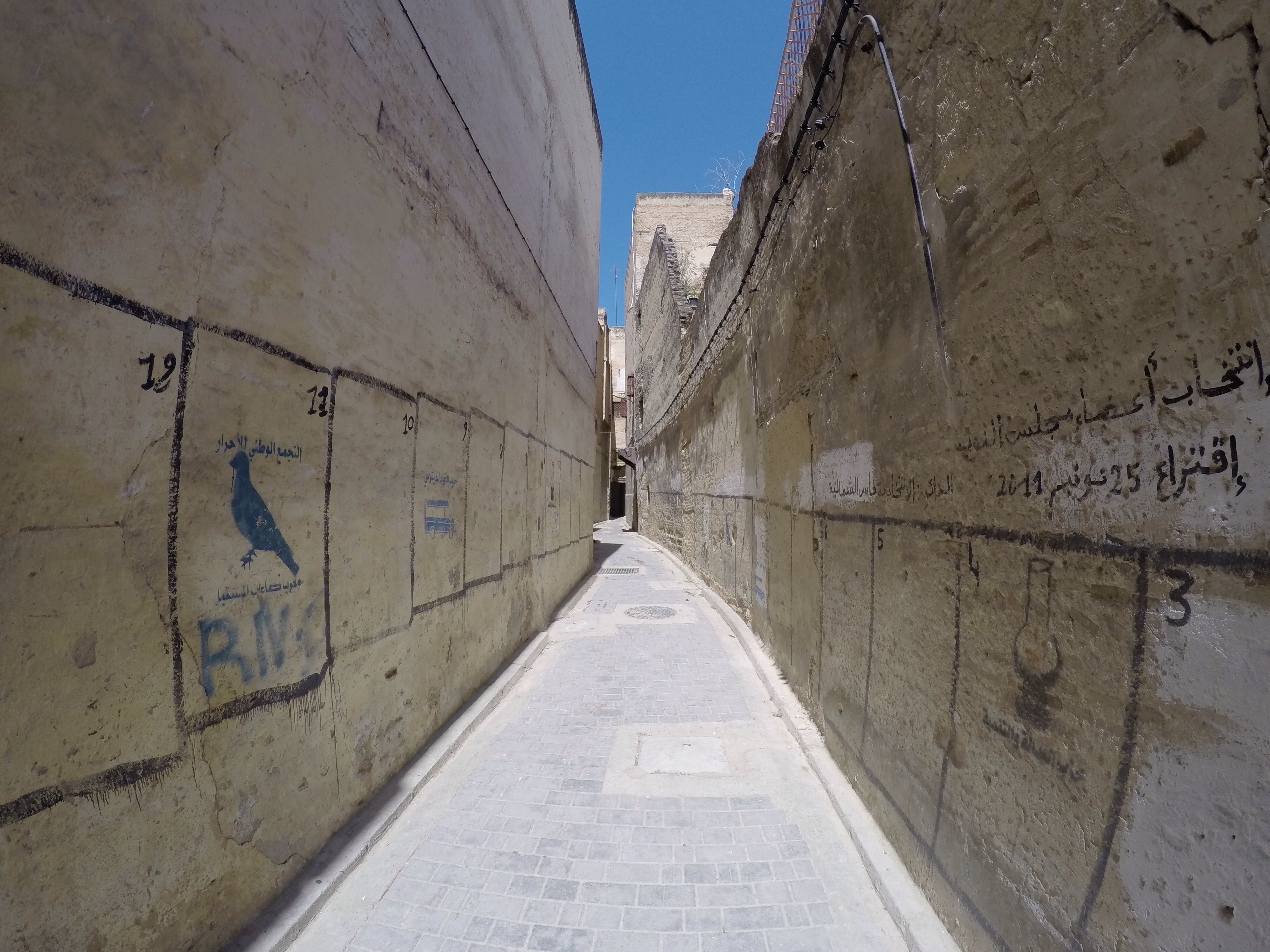
The only street in Fes where political parties are allowed to display their electoral symbols

The only street in Fes where political parties are allowed to post their electoral symbols

The biggest pedestrianized Medina in the world is also in Fes. An interesting fixture I saw in Fes was the Dar al-Magana (clockhouse) opposite Madrassah Bou Inania. The clockhouse used to consist of 12 windows above 13 carved wooden shafts that would hold brass bowls. One could tell the time by looking at the brass bowls that were filled with water. How the entire mechanism worked was a secret that the mechanic who devised it took to the grave.

On Friday 8th May I did a day trip from Fes to Moulay Idris Zerhoun, which has the Shrine of Moulay Idris – the founding father of the Kingdom of Morocco. He came to Morocco in 789AD bringing Islam to the region. He is revered by all the Moroccans, and is descendant of the Prophet Muhammad (PBUH) through his grandson Imam Hasan (RA). 5 kms from Moulay Idris are the ruins of the Roman city of Volubilis which was founded in 3rd century BC.

Fortunately on the hike from Moulay Idris to Volubilis we ran into two archeology students who were staying there for a conference and and gave us a private tour of the site – Thank you Zeineb and Eman!

From Fes I hired a taxi with three other travellers I met to make the 8hr ride to Rissani, a small city in the Eastern part of Morocco close to the ruins of Sijilmasah. Back in the fourteenth century Sijilmasah used to be a thriving town when Ibn Battutah visited it on his way to Mali

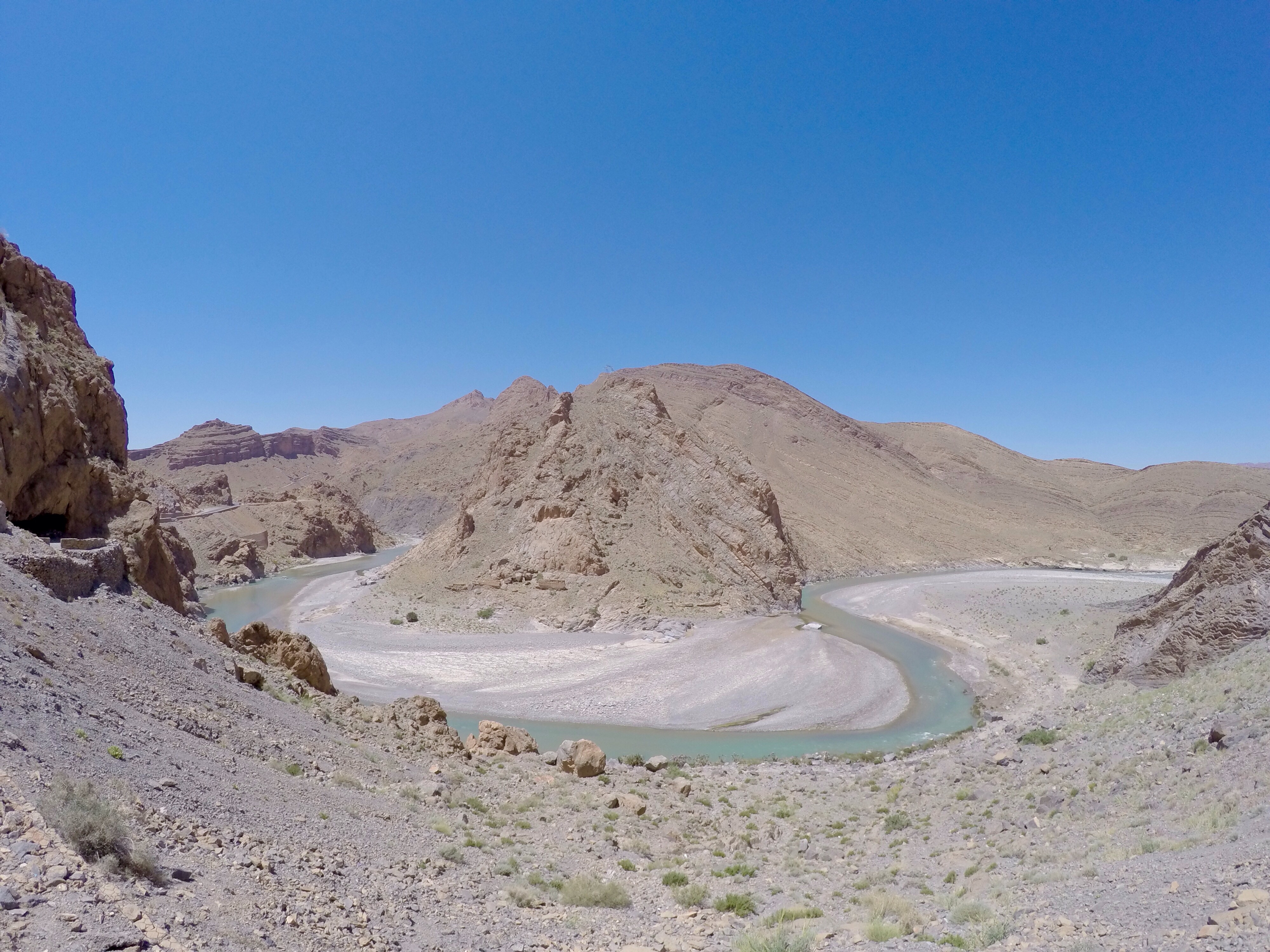
Moroccan version of the  Horse Shoe Bend in Arizona

On the road from Fes to Rissani I came across the Moroccan version of the Arizonian Horse Shoe Bend

I first reached the city of the Sijilmasah, a very beautiful city. It has abundant dates of good quality. Here I stayed with the jurist Abu Muhammad al-Bushri, whose brother I had met at Qanjanfu in China.

This beautiful city, now in ruins, is approximately 10 kms from Rissani. We reached Rissani around 3pm and after a quick bite and stocking up on our water supplies we jumped in a 4×4 to make our way to Merzougha inside the Western Sahara

Chefchaouen – Abdul’s next desi catch!

By my fifth day in Morocco I had already gotten used to the Moroccan shop keepers ‘Nationality Guessing Game’. Every once in a while a shop keeper sitting outside his shop upon seeing me (or for that matter perhaps any other tourist) would uninvited try and guess my Nationality out aloud. ‘India!’, the shop keeper would call out, the most common first guess I would hear as I’d stroll through the streets of the medina. Continuing in my stride I’ll wave my head sideways at each incorrect guess. ‘Spain!’..’Italy!!’..”Brazil!!!” each with a higher pitch and a sense of urgency as the distance between me and their shop grew. Nine out of ten times they would guess Pakistan while I’d be still within earshot; at which I would raise my arm with a thumbs up..

On my last day in Chefchaouen Abdul, a carpet shop owner, sitting outside his shop guessed Pakistan in his first attempt as I passed by his shop on my way to the hostel; I did my customary thumbs up and kept walking. Abdul called out behind me asking if I had a quick minute to translate a message someone had written to him in Urdu. A little curious and surprised as to what he wanted translating I followed him into his shop. He sat me down and told me how he had befriended many people across the globe and that a few of them stayed at his home and some even invited him to stay over with them.

I didn’t have any reason suspect that Abdul may slowly be unfurling his sales net around me. So far he had not mentioned anything about carpets at all. I told him politely that I did not have time as I had a bus to catch in 1.5 hrs so if he wanted me to translate something from Urdu to English then he needed to proceed quickly. Going to the back of his shop he came back with a thick register and started showing me messages that numerous people from around the globe had written thanking him for the great deals he had offered them on the carpets they had purchased from him..

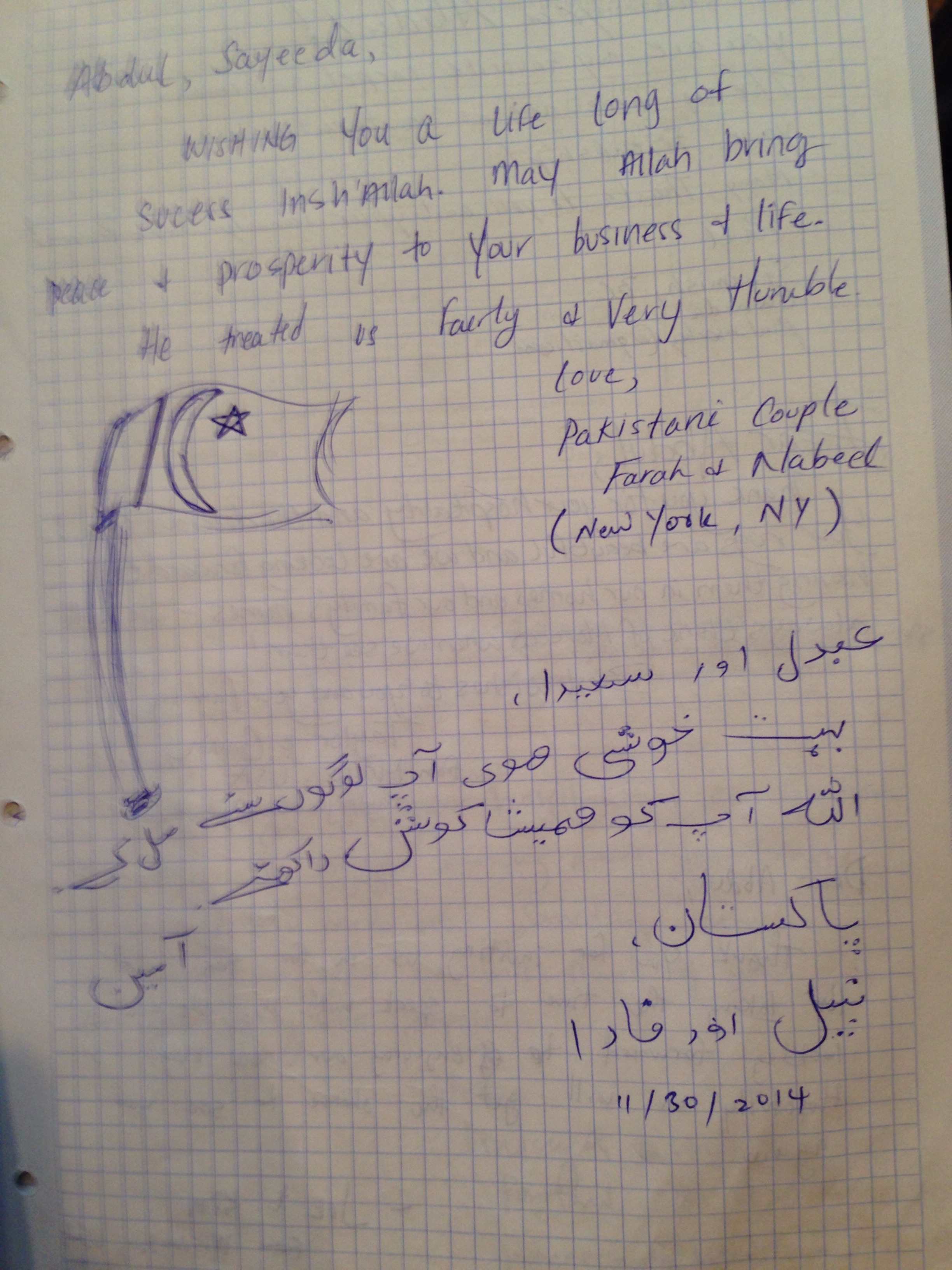
From Farah & Nabeel NYK

Thank you note from Nabeel and Farah


Noticing that I was somewhat impressed by the volume of appreciative messages from buyers who all seemed to think they got a brilliant bargain from Abdul, he quickly turned a few more pages over until he came to the message written by a Pakistani couple – Farah and Nabeel visiting from NewYork. They had written a message in English followed by another one in Urdu which was not altogether different from its English counterpart about the carpet they had bought from Abdul at a good price.

Abdul sensing that I was feeling a little unamused that he had just called me in to show something for which he virtually already had a translation, called his son over to start unrolling some carpets to show me. I told him I wasn’t interested besides I was back packing and I didn’t have any space to carry even a small rug let alone a carpet. Naturally he had heard this tale from many people whom he had coaxed into buying his rugs and carpets; So he went on telling me about the significance of buying a carpet – from its life long durability, to quoting vague religious references on the importance of buying a gift for one’s mother, to suggesting that I didn’t have to carry it with me as I could post it from the post office (much later I was to find out that posting even a tiny rug the size of a doormat would cost more than the price paid for the rug itself!).

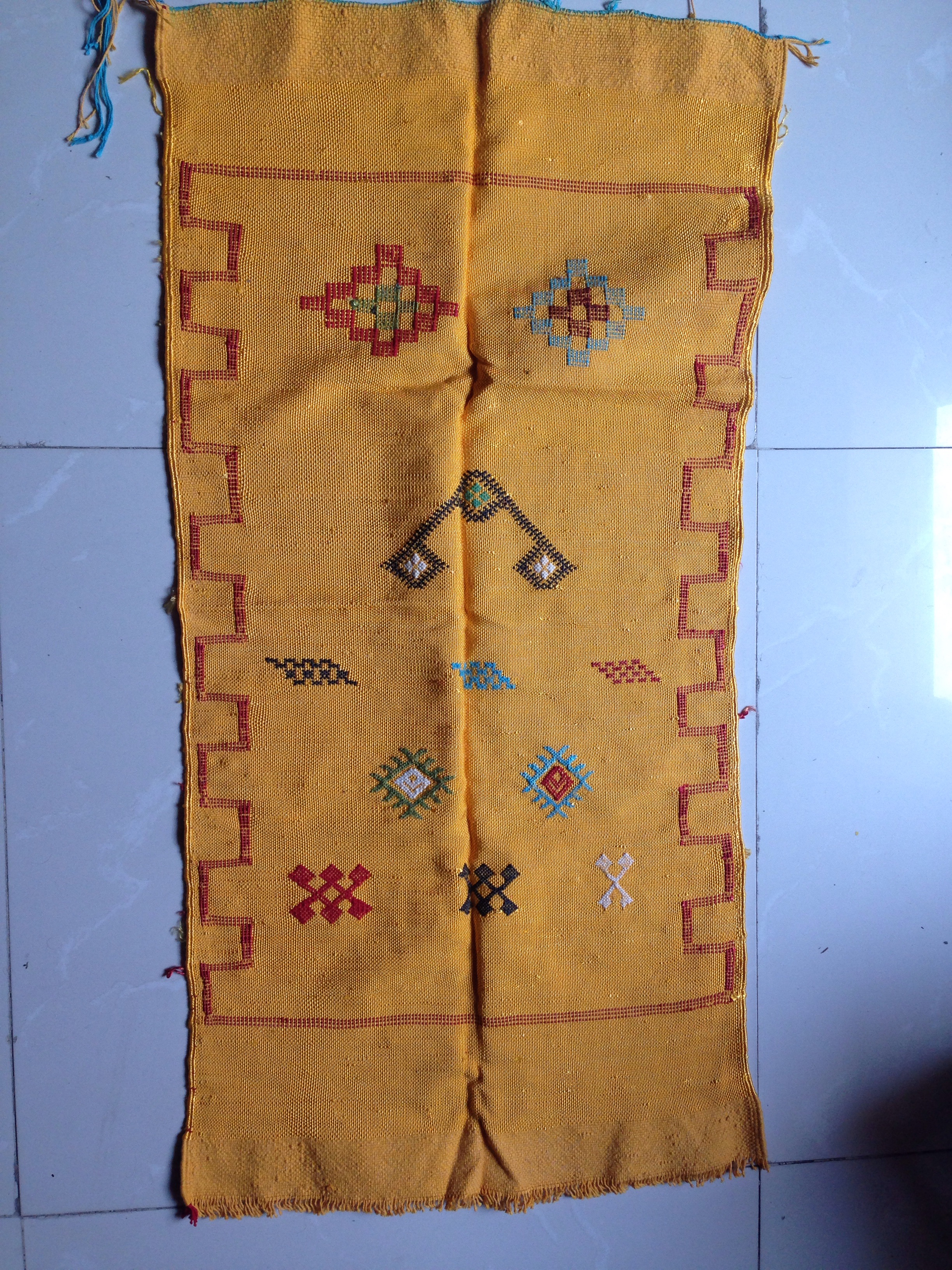
Realising that I would be travelling for four months and anything bigger than a doormat would be a hard-sell he pulled out a few small rugs made of cactus thread. Demonstrating their fire proof quality by trying to light them up with his lighter, the tiny mat size rug looked impressive. He asked me to pick a color that I liked (with no obligation to buy, ofcourse!). Upon telling him that I liked the yellow one he said it was 600 Dhs. I thanked him politely saying that it was outside my budget. Abdul quick to capitalize on yet another novice error asked the price I’d be willing to pay for it. Having no idea how much a rug like that would cost I decided to go for a ridiculously low price, less than half what Abdul had quoted. “250 Dhs”, I said hoping Abdul would realize that I really was not serious about the rug at all and leave me to make my way to the bus station.

The mini rug that I ended up buying

The mini rug that I ended up buying

Abdul declined saying it was too low. At that point I felt that at least I had established that the value of the rug was higher than 250 Dhs, having done this over and over he knew I’d think that too. Abdul went on about how a dinner out in London would cost more than that and offered 350 only because he did not want to bring bad luck to his shop by turning someone away especially not a ‘Muslim brother’, otherwise he would never sell a rug this expensive at such a low price. I rejected his offer hoping that he wont budge and I could take my leave, but Abdul realising that I had fallen for his sales trap hook line and sinker offered 300 Dhs. At that point I was already running too late for my bus, and felt too ashamed to turn a reasonable compromise, to the 250 Dhs I had unwittingly quoted, down. Besides I felt there was no other way to leave his shop with my dignity intact; so I paid him 300 and rolled the tiny mat up.

Just as I was leaving Abdul brought his big fat guest book out again and sat me down to write a short message in English and Urdu. I quickly scribbled a thank you note in both English and Urdu for the amazing bargain Abdul had offered me !?!

A little dazzled as to how a leisurely stroll in the medina ended up costing me 300 Dhs! It was only a few seconds after I had stepped out of his shop that the whole episode flashed across my mind..

Soon there will be another unsuspecting Pakistani walking the streets of Chefchaouen who will be asked by Abdul to translate a message from Urdu, this time it would be my hand writing that would serve as a bait for Abdul’s next desi catch!

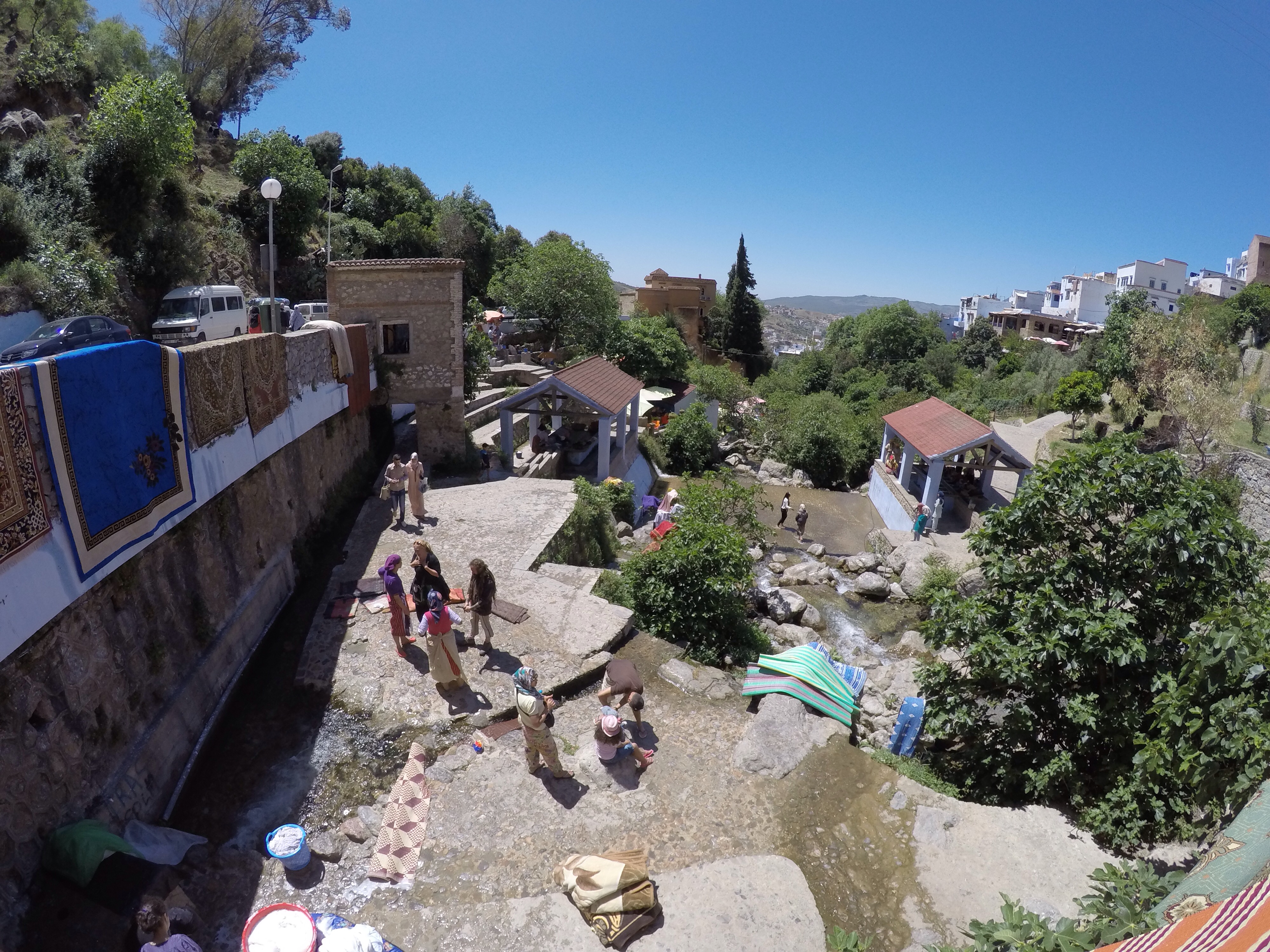
Chefchaouen – Laundering Carpets and Drugs Along The Ras El’Ma River

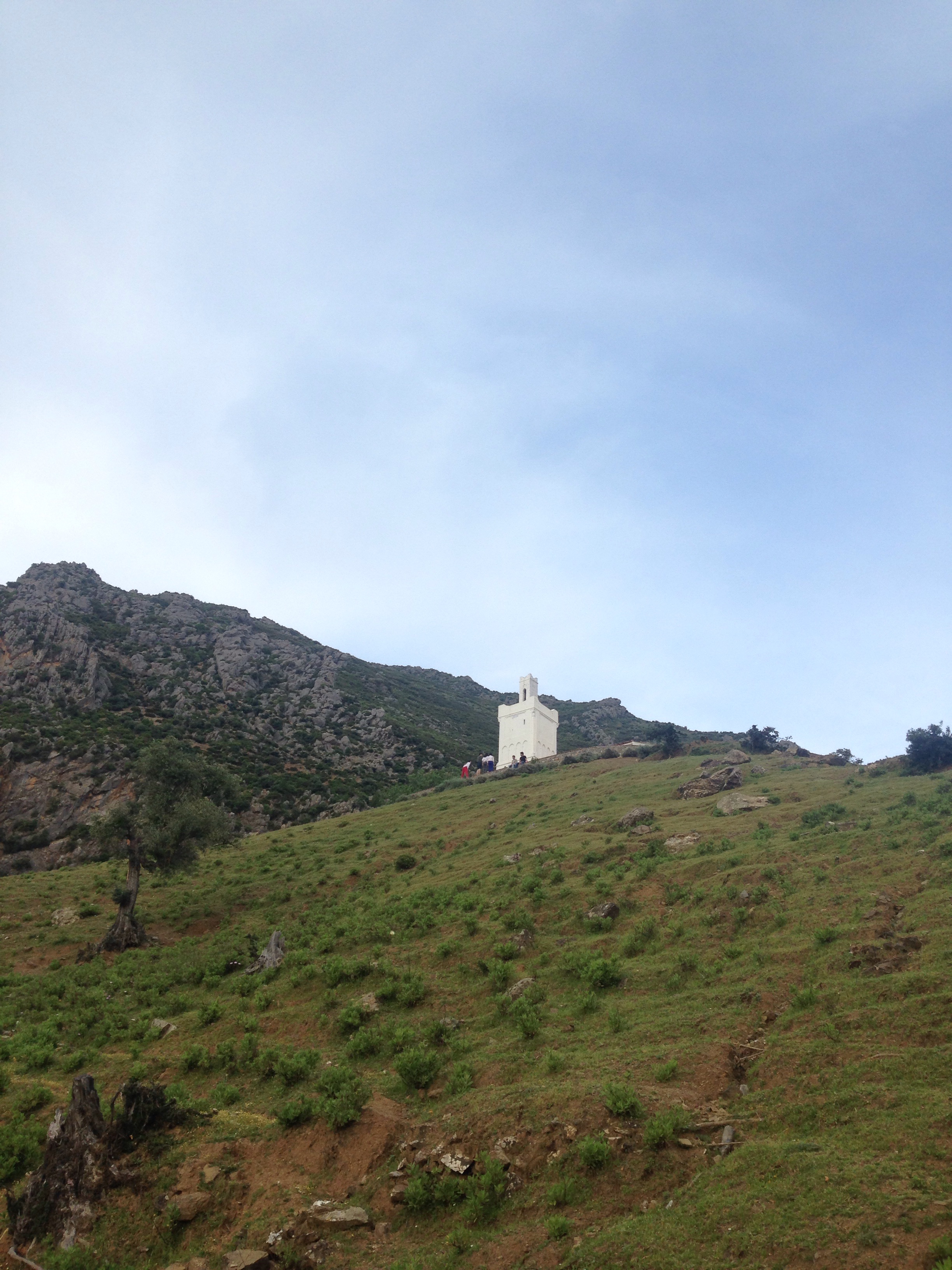
The Spanish mosque sits atop a hill, next to Ras el’Ma river which is used by the local women as a carpet laundry. It is about a 30-40 minutes trek from the medina. The mosque itself is abandoned and not used for prayers, but it serves as a very good vantage point to admire the views of the city and its surroundings.

Spanish Mosque

Spanish Mosque

Just before sun set on my way back from the Spanish masjid to the medina I stopped near an unmarked trail head, that veered off betwteen two adjacent ridges, with a steep ascent leading into Talassemtane National Park. Waiting there and thinking whether it would be a suitable hike in my joggers, I noticed a flurry of local men who would follow that trail and disappear for 10/15 minutes high up into a bushy patch only to reemerge a few mins later to head back to the city.

Curiosity got the better of me and I decided to follow the same track. Soon I heard a shout from further up ahead as a man emerged from the thicket, waved at me and screamed something in Arabic. With my exceptionally primitive vocabulary I couldn’t make out what he was saying and decided to continue. A few minutes later another guy who was making his way behind me caught up and asked where I was headed in a mix of English and Arabic.

This slideshow requires JavaScript.

He wanted to know if I was interested in buying hashish, cocaine or heroine ? I told him I was only here for a hike and wasn’t interested in either. In our combined English/Arabic we exchanged a few more sentences and he asked me where I was from. I told him Pakistan, at which his grin turned into a big smile and said that the heroine the guy up top was selling was from Pakistan! Not feeling particularly proud about it, I told him it must be Afghanistan that he is confusing it with, but he sounded adamant that it came from Pakistan. Not wanting to curb his excitement any further, I let it rest with the thought that it’s probably smuggled from Afghanistan into Pakistan from where it makes its way to North Africa, and decided to steer clear of the busy patch for which one had to veer off the trail.

Local women washing the carpets

Local women washing the carpets

Continuing ahead the view got better and better as I climbed higher. Another 15 mins into the hike I ran into a group of teenagers with their tshirt tied around their heads sitting inside a mini cave heating up something. They weren’t very pleased at seeing me either and shouted something in Arabic at which I responded with a salam and continued my ascent to find a good spot to sit and admire the view.

After a while when I came down, a guy sitting close to the start of the trail who spoke perfect English, noticing that I wasn’t a local asked me what I was doing up there and that it wasn’t a good place to venture into. According to him everyone knew about the drug dealing but as long as the activity was outside the city the authorities turned a blind eye to it; And that if I had ventured further on I would have come to big hashish plantations..a part of the National Park to explore on my next trip perhaps..

The Second Best Fruit In The World

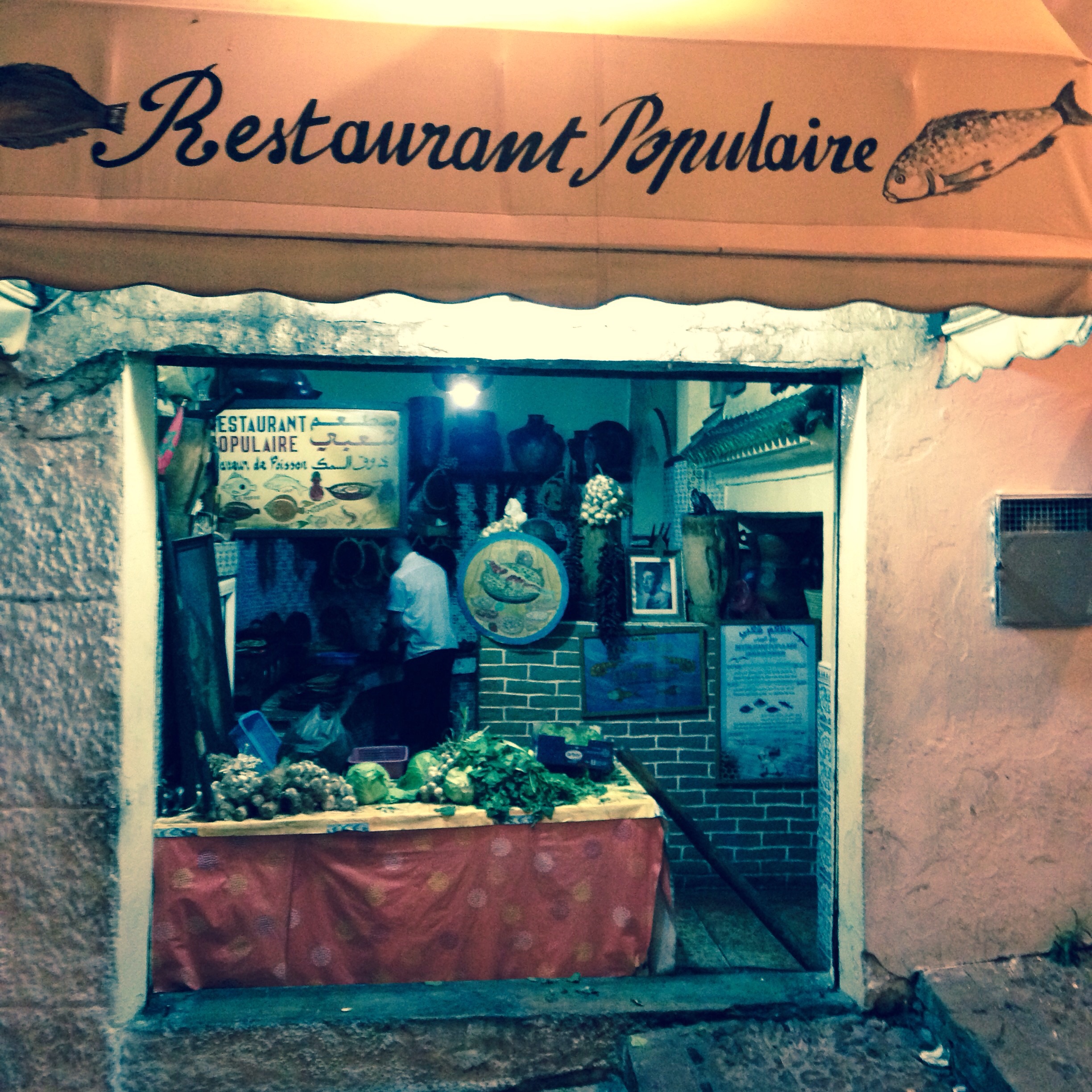
Restaurant Populaire

Restaurant Populaire

On Moncefs recommendation we decided to try out Resturant Populaire in Tangier. Not a big fan of sea food I was a little reluctant at first.

For me the benchmark of a good resturant is that it has to be frequented by locals (and not just ‘tourons’). And this place was teeming with locals! After a 30 mins wait we finally got a seat.

They had a set menu (i.e the menu did not exist) which was great as I didn’t have the chance to annoy the waiters with my endless barrage of questions about things on the menu. The minute we got seated the chef started delivering his goodness, and I realised why it was so popular (Populaire!)

For 200 Dhs (~£14) it might have been slightly expensive by average Moroccan standards (!?) but every bit worth the delicious seven course meal! Easily one of the best sea food restaurants I have ever been to in my life. Everything was tasty from the fresh juice (I have no idea what combination of fruits they used but I must have downed 5-6 glasses of that amazingly refreshing cocktail of some magical fruits!), to the variety of different fish cooked in different styles, leading to the dessert consisting of a combo of local honey dried fruits, nuts and variety of berries to finish it all off with the second most delicious fruit known to man – Cherimoya!! (a Pakistani mango being the most delicious ofcourse!)

This slideshow requires JavaScript.

Highly recommended for anyone who goes to Tangier. The pictures don’t do justice to what was served. Patience is not my virtue on a hungry stomach, so the table does look like it was hit by a tornado, even though I tried to arrange things a little before taking a few shots (including the picture of a half eaten Cherimoya)..

Tangier – The Hometown and Final Resting Place of Ibn Battutah

I landed in Tangier on the 1st of May and after dropping my backpack at the hostel, I went about to find the tomb of Ibn Battutah.

The Mazaar (Masoleum) of  Ibn Battutah

The Mazaar (Masoleum) of Ibn Battutah

Of all the travellers I met during my travels in Morocco only two had heard the name Ibn Battutah, and neither of them knew who he was! It was a sad fact especially since each traveller I met knew very well who Marco Polo was.

Even more disappointingly neither of the three guys who worked at the hostel I stayed at in Tangier (Ibn Battutah’s hometown) knew the way to Ibn Battutah’s tomb, arguably the most important site in all of Tangier, even though it was hardly a 3-5 mins walk from the hostel..

Armed with a very primtive vocabulary of Arabic I set out to locate the tomb by asking around. Barely a few steps from the hostel door I ran into a bunch of young guys trying to sell me Hashish (after a few days in Tangier, I realised selling hashish was no big deal, in fact smoking it was very common and even socially acceptable in the cafes). Hamza who was standing with the group said he knew a good local eating place as well as the location of the tomb and said he could show me both, not realizing that everything in Morocco comes at a cost especially over eager locals and touts giving you directions.

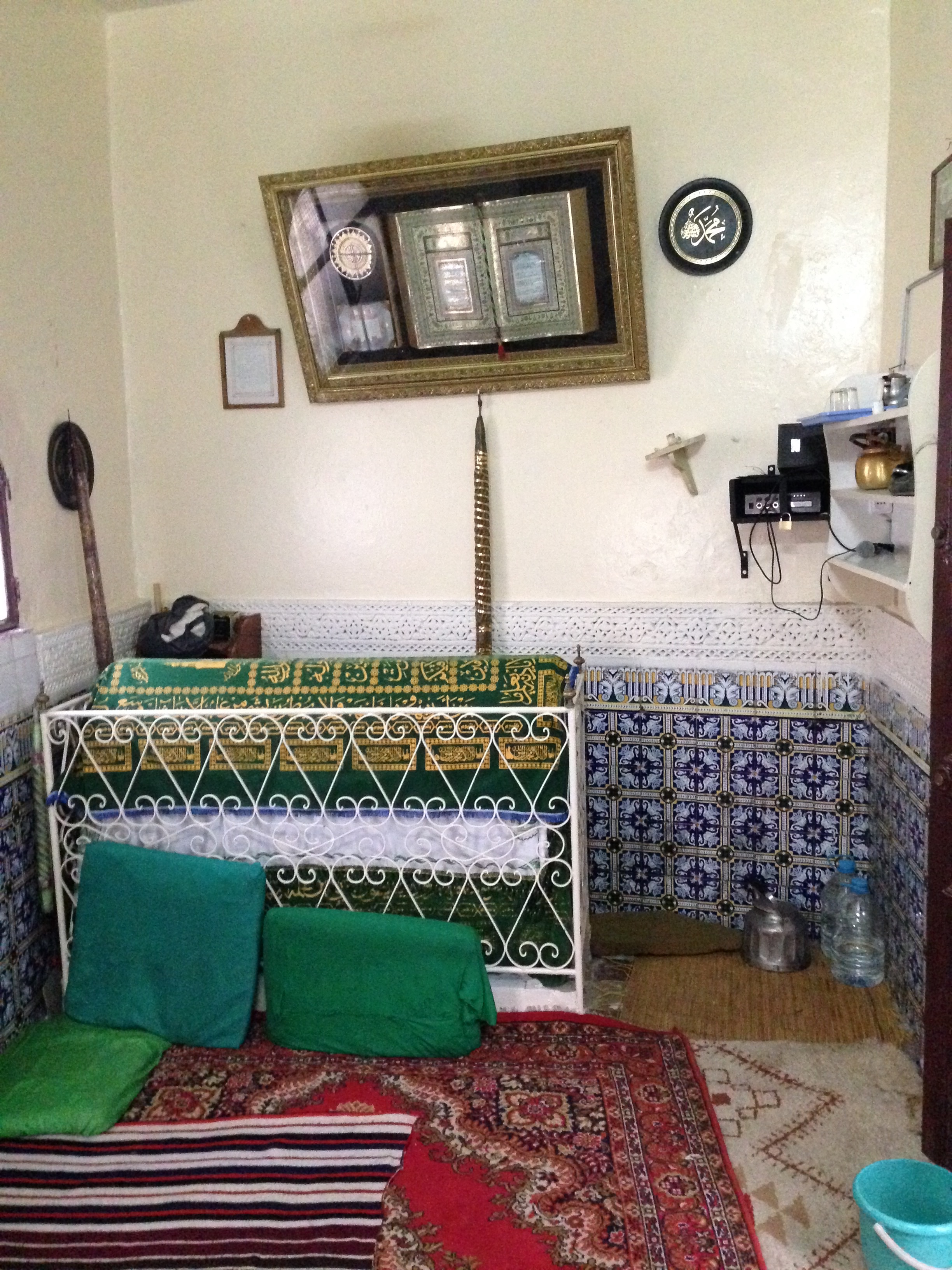
Inside the Mazaar, the tomb and final resting place of  Ibn Battutah

Inside the Mazaar, the tomb and final resting place of Ibn Battutah

Inevitably after a very long stroll circumambulating around the medina we reached the tomb. All the while I stayed inside the small approximately 8 * 12 feet mazaar (mausoleum) Hamza waited outside, even though I had thanked and bid farewell to him. Eventually he walked with me back to the hostel and I realised why we took the longest possible route to Ibn Battutahs tomb when he asked me for massive tip for showing me ‘such a difficult to find way’ and for hanging around all that time (uninvited)

After getting ripped off on the first day of my journey, I worked out a successful tout avoiding strategy for the rest of my trip – only ask the shop keepers for directions if you get lost in the winding, never ending streets of the medinas, they will guide but won’t leave their stalls to come along and show you the way .

Tangier – A Graveyard With A View

On the way to Cafe Hafa, famous for its views across the Strait of Gibraltar, Moncef and I walked past a graveyard. He remembered that his grandfather was burried there so we decided to make a quick stop to offer a prayer by his grave.

The last time Moncef had visited his grandfathers grave was as a small child. All he remembered was that he was buried somewhere in the old graveyard, obscured from view, located at the  back of the new graveyard and accessible only by a small dirt footpath that connected the two.

As we reached the tiny gate at the end of the footpath which led to the old graveyard I peered through entrance. Standing in the doorway one couldn’t help but admire the amazing view! The graveyard was located right at the edge of a precipice overlooking the Strait of Gibraltar – A sea of the dead overlooking an ocean full of life!

This slideshow requires JavaScript.

Mocef told me that his father had already purchased a small tract for himself in this graveyard so he could be buried close to his father and to admire the amazing view. There was no more space to burry anyone there, barring those who already had procured land for allocation of their grave.

Moncef, didn’t quite agree with his father’s idea of buying a grave with a nice view. After all once in the soil you wouldn’t really be able to admire the beautiful  view !?

Perhaps the beautiful view serves as an added incentive for one’s near and dear to visit the graveyard more often and make a prayer for the departed..

Create a free website or blog at WordPress.com.